

Imagine this: You’ve just built a 1,000-horsepower engine. The cam is aggressive, the fuel system is dialed, and the tune is perfect. But on the launch, the transmission hesitates. It shifts sloppy. You just lost the race.
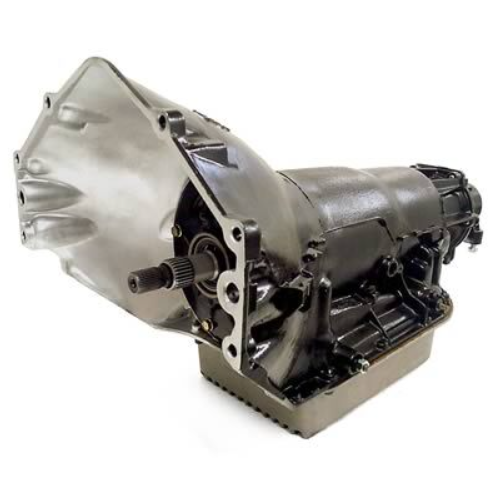
For serious drag racers, drifters, and off-road enthusiasts, the transmission isn’t just a part of the drivetrain—it is the strategic core of vehicle performance. While stock gearboxes prioritize fuel economy and smoothness, an ATI Performance Automatic Transmission is engineered for one thing: raw, violent, repeatable power transfer.
In this guide, we go beyond the catalog specs. We will dissect the engineering secrets, compare ATI against the legacy competition, and reveal the future of torque converters and valve bodies.
The Engineering Ecosystem: Why ATI is Not a “Rebuilt” Transmission
Most people think a performance transmission is just a stock unit with tougher clutches. That is wrong. ATI (Automatic Transmission, Inc.) approaches the gearbox as a hydraulic ecosystem. To understand the performance leap, you must look at three specific engineering modifications that differentiate a true performance build from a simple rebuild.
The 300M Input Shaft & Drum Assembly
The weakest link in high-horsepower GM and Ford transmissions is torsional twist. Under heavy load, stock input shafts snap like a pencil. ATI utilizes 300M alloy vacuum-arc re-melted steel for the input shaft and reaction drum. This provides a 300% increase in yield strength.
-
Actionable Insight: If you are launching above 4,000 RPM on slicks, a billet 300M shaft isn’t an upgrade; it is a survival requirement.
High-Ductility Friction Materials
While “Kevlar” is a popular buzzword, ATI focuses on high-ductility carbon-friction plates. Unlike standard paper-based clutches that glaze under heat, ATI’s proprietary material actually increases its coefficient of friction as heat rises (up to 300°F). This creates a mechanical “self-tightening” grip during a pass.
Precision-Bored Valve Bodies
Hydraulic leakage kills shift speed. ATI CNC-machines and precision-bores every valve body bore. They reduce valve-to-bore clearance from the factory standard of .0025” down to .0008”. This eliminates cross-leaks, resulting in shift times measured in milliseconds rather than seconds.
The Ultimate Showdown: ATI vs. Reid vs. Rossler (Comparative Analysis)
Choosing a race transmission involves significant investment. Below is a comparative analysis of the big three players in the automated racing transmission space. Note that while Reid and Rossler offer excellent race-specific units, ATI holds the advantage in street-to-strip adaptability.
| Feature / Metric | ATI Performance | Reid Racing (Powerglide) | Rossler Transmissions |
|---|---|---|---|
| Specialty | High-torque street/strip & Turbo 400 | Dedicated drag racing (Powerglide) | Extreme horsepower (2,000HP+) |
| Converter Strategy | Patented “Treemaster” anti-ballooning plate | Case-specific, external bolt | Custom-built per dyno sheet |
| Shift Firmness | Aggressive but tunable (Transbrake optional) | Violent (Race only) | Very aggressive |
| Fluid Temp Management | High-flow lube circuits (OEM+) | Basic race routing | External cooler mandatory |
| Best For | 800-1,500HP Bracket, Pro Touring | 1,500HP+ Pro Mod / Drag radial | 1,200-2,000HP Outlaw racing |
| Price Range (Converted) | $$$ (Middle/High) | $$$$ (High) | $$$$ (Very High) |
The Verdict: If you need a transmission that can drive to a car show, then run a 9-second quarter mile, and drive home—ATI wins the utility category.
The “Treemaster” Advantage: Rethinking the Torque Converter
For decades, the torque converter was just a “fluid coupling.” ATI’s innovation, the Treemaster Series converter, changed the physics. Unlike standard multi-disc converters that sacrifice top-end speed for bottom-end torque, the Treemaster uses a variable-turbine angle design.
How it Reduces 60-Foot Times
At idle, the blades sit at a high angle for fluid multiplication (stall). As centrifugal force increases at 4,000 RPM, the turbine blades physically flatten out, acting like a direct drive coupling. This reduces parasitic slip from 15% (stock) to less than 4% at the finish line.
The Anti-Ballooning Plate
A hidden danger of high RPM is converter “ballooning” where internal pressure expands the housing like a balloon until it contacts the flexplate, causing a catastrophic explosion. ATI integrates a 4140 chromoly anti-ballooning plate.
-
Pro Tip: If you run nitrous or a procharger, verify your converter has this plate. Many budget units skip it.
Future Trends: The Shift to Mechatronic Integration & Data Logging
We are entering the era of the “Smart Transmission.” The future of the ATI Performance Automatic Transmission is not just mechanical; it is digital.
The End of the “Guess the Stall” Method
Historically, you guessed your stall speed based on a cam card. Future ATI units will likely include embedded thermocouples and pressure transducers that transmit real-time data to your Holley EFI or MoTeC display. Imagine knowing exactly when your transmission is heat-soaking before a pass.
Solid-State Hydraulic Controls
ATI is currently R&D-ing solenoid-driven valve bodies that bypass traditional spring-and-ball hydraulics. This will allow drivers to change shift firmness and shift points via a Bluetooth app on their phone without dropping the pan.
-
Innovation Insight: This will democratize transmission tuning. A driver could run a “soft street” tune at 600 HP, then push a button for a “race” tune with 200ms shifts at the track.
Eco-Performance Paradox
As CAFE standards tighten, even race manufacturers must consider efficiency. ATI is pioneering low-drag planetary gearsets that meet SFI specs but reduce parasitic loss by 12% effectively giving you 30 more horsepower to the tire without changing the engine.
Installation & Break-in: Do Not Skip the “Heat Cycle”
You can buy the most expensive ATI transmission on the market, but install it wrong, and it will fail on the first pass. The most overlooked step is the break-in heat cycle for the friction materials.
The 30-Minute Rule
-
Start the engine. With the transmission in neutral, let it idle for 20 minutes.
-
Cycle the gear selector (P-R-N-D-N-R-P) slowly, pausing 10 seconds in each gear.
-
Crucial: Drive at varying speeds (25-50 mph) for 15 minutes without wide-open throttle. You must use non-synthetic Dexron III/Mercon fluid for break-in. Synthetic fluid is too slippery and will prevent the clutches from seating.
-
After 50 miles, drain the fluid (you will see metallic “glitter” this is normal break-in debris).
Frequently Asked Questions (Performance Logistics)
Will an ATI transmission work with my stock driveshaft?
No. The increased torsional shock from an ATI performance transmission will destroy a stock driveshaft. You must upgrade to a chromoly or carbon fiber driveshaft simultaneously.
Can I retain my factory torque converter lockup?
Yes, but ATI recommends their “Non-Lockup” race converters for drag use. Lockup converters generate heat during engagement on the big end. For street cars with highway driving, specify the “Lock-up Pro” series.
How does ATI handle transmission brake (transbrake) wiring?
ATI uses a robust solenoid rated for continuous duty (unlike race-only units that melt). You can wire this directly to a momentary steering wheel button. Always use a diode in the wiring harness to prevent voltage back-feed into the ECU.
Is a deep transmission pan necessary?
For a naturally aspirated street car, no. For a turbo or nitrous car running 9s or quicker, yes. You need the added fluid volume to slow down thermal degradation. Add an extra 2 quarts over stock for every 100 horsepower over 600.
Conclusion: Reliability is a Performance Metric
You cannot cross the finish line if you cross the start line. Horsepower gets the headlines, but the ATI Performance Automatic Transmission wins the races. It is the silent partner that takes the abuse, manages the heat, and delivers the torque to the pavement exactly when you demand it.
Whether you are rebuilding a classic Chevelle, building a Turbo LS Fox-body, or upgrading a modern Hellcat, remember that your engine breathes, but your transmission survives. Invest in the hydraulic engineering first.